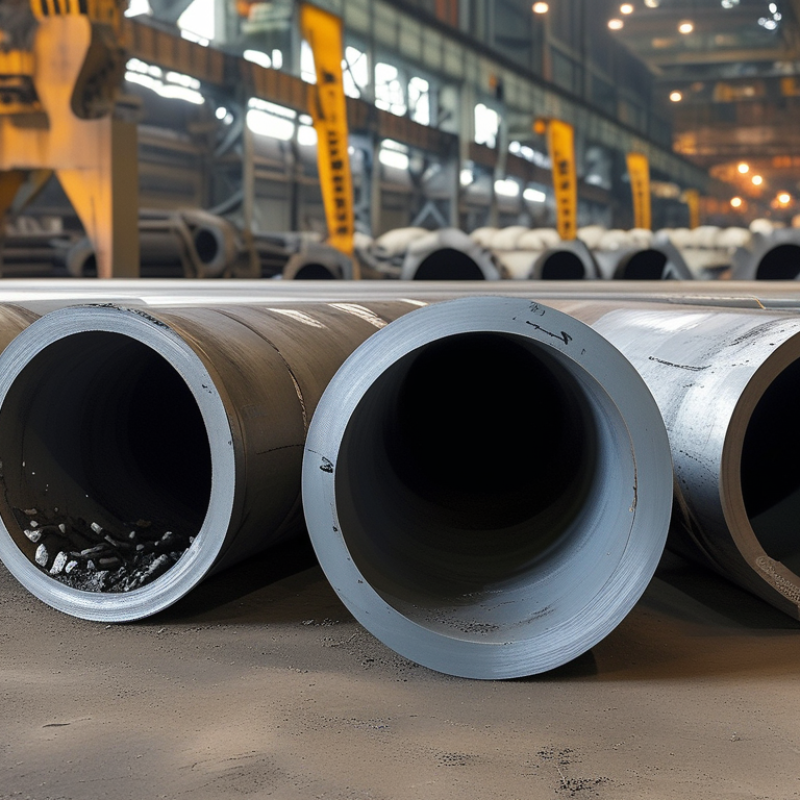
| Product Definition | Carbon seamless pipe is produced from a solid steel billet or round bar and formed without a longitudinal weld seam. | Clear product specifications covering outside diameter, wall thickness, length, steel grade, manufacturing process, and end finish. | Helps purchasers select pipe suitable for pressure, temperature, mechanical-load, and installation requirements. |
| Common Product Standards | ASTM A106 covers seamless carbon steel pipe for high-temperature service; ASTM A53 includes seamless and welded steel pipe; API 5L covers line pipe requirements. | Manufacturing, testing, marking, and documentation aligned with the standard specified in the purchase order. | Standards provide a common technical basis for international procurement, inspection, and acceptance. |
| Typical Carbon Steel Grades | Examples include ASTM A106 Grade B, ASTM A53 Grade B, and API 5L Grade B. Exact chemistry and mechanical limits depend on the applicable standard. | Grade selection based on design pressure, operating temperature, fluid type, welding needs, and applicable codes. | Correct grade selection reduces risks related to strength, toughness, corrosion, and service failure. |
| Manufacturing Route | Typical processes include billet heating, piercing, elongation, sizing, heat treatment, straightening, cutting, and finishing. | Controlled process parameters, traceability from billet to finished pipe, and documented heat-treatment records where required. | Process control supports dimensional consistency, mechanical performance, and repeatable quality across production lots. |
| Dimensional Control | Key measurements include outside diameter, wall thickness, length, ovality, straightness, and end squareness. | Calibrated measuring equipment, inspection records, and tolerances stated according to the selected product standard. | Accurate dimensions support fit-up, flange or threaded connections, fabrication, and field installation. |
| Mechanical Properties | Typical verification includes yield strength, tensile strength, and elongation; required values vary by grade and standard. | Heat or batch-level test results issued in a material test certificate when required by the contract. | Confirms that the pipe can withstand the specified design and operating loads. |
| Chemical Composition | Carbon, manganese, phosphorus, sulfur, and other specified elements are controlled according to the applicable grade. | Heat analysis and, where required, product analysis with traceable test results. | Supports weldability, strength, ductility, and compliance with project specifications. |
| Non-Destructive Testing | Hydrostatic testing and/or approved non-destructive examination may be required depending on the standard and purchase order. | Documented test procedures, calibrated equipment, qualified personnel, and test reports linked to pipe identification. | Improves confidence in pressure integrity and helps detect relevant discontinuities before shipment. |
| Surface and End Finish | Options may include plain ends, beveled ends, threaded ends, grooved ends, or protective coatings when specified. | End preparation, surface condition, caps, marking, and coating requirements matched to the installation method. | Reduces site modification, protects pipe ends, and improves installation efficiency. |
| Traceability | Traceability normally links each pipe or bundle to a heat number, grade, size, standard, and inspection record. | Permanent or durable marking and a complete document trail from raw material through final inspection. | Supports audits, claims management, regulatory review, and long-term asset documentation. |
| Quality Documentation | Common documents include commercial invoice, packing list, certificate of origin, material test certificate, inspection report, and test records. | Accurate, consistent, and shipment-specific documentation prepared in the buyer's required format. | Facilitates customs clearance, third-party inspection, payment processing, and project approval. |
| Typical Applications | Oil and gas transmission, steam and process piping, boilers, heat exchangers, structural supports, and general industrial service. | Application-specific recommendations based on pressure, temperature, fluid, joining method, and applicable design code. | Ensures the selected pipe is appropriate for the intended operating environment. |
| Export Packaging | Common measures include steel or textile bundling, end protection, moisture protection, and seaworthy packing. | Packaging designed for handling, container or break-bulk transport, storage, and destination-country requirements. | Minimizes damage, corrosion, identification loss, and delays during international transportation. |
| Role in Global Supply | A top manufacturer coordinates engineering, production, inspection, documentation, packaging, and delivery. | Acts as a technical and supply-chain partner rather than only a pipe seller. | Reduces procurement complexity, improves project predictability, and supports compliance across different markets. |