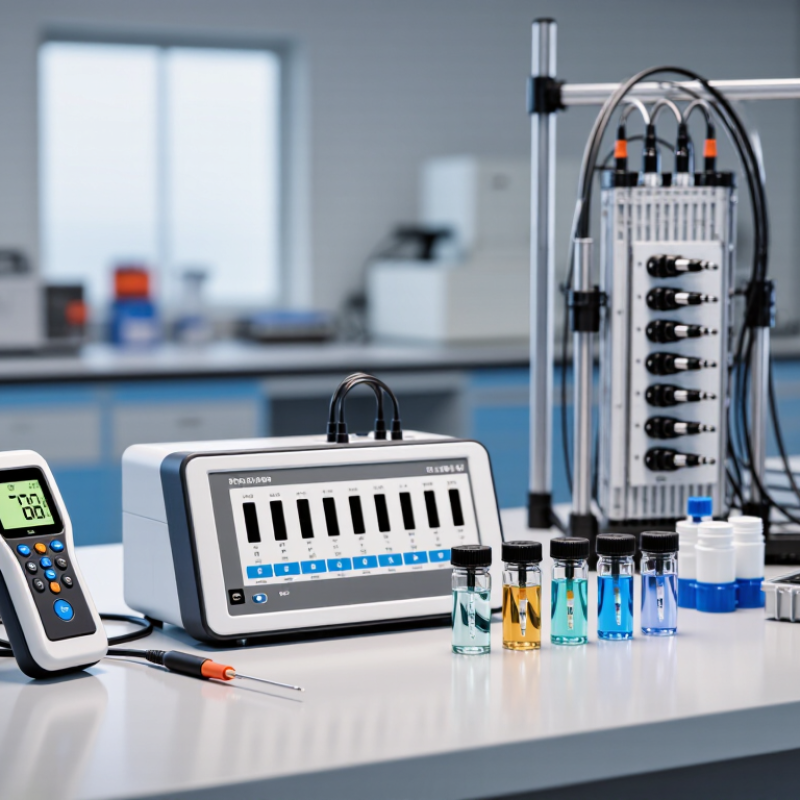
| Handheld Multiparameter Monitor | pH, oxidation-reduction potential, dissolved oxygen, conductivity, salinity, total dissolved solids and temperature | pH: 0–14
Dissolved oxygen: 0–20 mg/L
Conductivity: 0–200 mS/cm
Temperature: approximately −5 to 60°C | pH: about ±0.01 pH
Dissolved oxygen: about ±0.2 mg/L
Conductivity: about ±1% of reading
Temperature: about ±0.3°C | Field surveys, aquaculture ponds, rivers, lakes, groundwater and wastewater inspections | Requires calibration before use. The probe is immersed directly into a representative sample or water body and should be rinsed between locations. | Portable, fast, comparatively affordable and capable of measuring several basic indicators at the same location. | Readings can be affected by fouling, bubbles, temperature changes, poor calibration and insufficient stabilization time. |
| Portable Turbidity Monitor | Turbidity and temperature | Commonly 0–1000 NTU
Some versions use a lower range for drinking-water samples and a higher range for wastewater | Typically about ±2% of reading or the stated instrument resolution, depending on the range and optical method | Drinking-water checks, surface-water monitoring, construction-site runoff and wastewater discharge inspections | Uses a clean sample cell or flow-through cup. The sample should be mixed gently, measured promptly and protected from bubbles and fingerprints. | Quick response, simple operation and useful for detecting suspended solids or sudden changes in water clarity. | Color, air bubbles, settling particles, scratched cells and strong ambient light can cause measurement errors. |
| Portable Residual Chlorine Monitor | Free chlorine, total chlorine, pH and temperature | Free chlorine: commonly 0–20 mg/L
Some low-range configurations are optimized for approximately 0–5 mg/L | Typically about ±0.05 mg/L at low concentrations or approximately ±5% of reading, depending on the method | Disinfection control in drinking-water plants, pools, food-processing water systems and treated wastewater | Requires a fresh sample and correct reagent dosage when using a colorimetric method. Electrode-based versions require membrane or sensor maintenance. | Useful for verifying whether disinfectant residual is present and whether dosing is within the operating target. | Results may be influenced by sample color, oxidizing chemicals, storage time, pH and incorrect reagent handling. |
| Benchtop pH/ORP/ISE Analyzer | pH, ORP, ion concentration and temperature; optional ion-selective electrodes for fluoride, nitrate, ammonium or other ions | pH: approximately −2 to 20
ORP: commonly −1999 to +1999 mV
Ion range: depends on the selected electrode | pH: up to approximately ±0.002 pH on laboratory-grade configurations
ORP: commonly about ±0.2 mV
Ion accuracy depends on calibration and matrix effects | Laboratories, drinking-water quality control, research, process verification and regulatory testing support | Needs stable bench conditions, suitable calibration buffers and clean electrodes. Samples should be at a controlled temperature when high accuracy is required. | Higher repeatability and resolution than most handheld instruments; suitable for calibration records and controlled laboratory workflows. | Not designed for unattended field deployment. Electrode aging, clogged junctions and unsuitable calibration standards can reduce accuracy. |
| Online Multiparameter Water Quality Monitor | Usually pH, conductivity, dissolved oxygen, turbidity and temperature; some configurations add ORP, salinity or chlorine | pH: 0–14
Dissolved oxygen: 0–20 mg/L
Conductivity: up to approximately 200 mS/cm
Turbidity: commonly 0–1000 NTU | Typically pH ±0.05, dissolved oxygen ±0.2 mg/L, conductivity about ±1% and turbidity about ±5% of reading, depending on sensors and conditions | Continuous monitoring in water-treatment plants, aquaculture systems, industrial processes and environmental stations | Requires a bypass line, immersion assembly or flow cell. Stable flow, automatic cleaning and scheduled calibration are important for reliable long-term operation. | Provides continuous trends, alarm outputs and data transmission through common industrial communication interfaces. | Higher installation and maintenance cost. Biofouling, suspended solids and sensor drift can create false alarms if cleaning is neglected. |
| Online Ammonia-Nitrogen Analyzer | Ammonia nitrogen, pH and temperature; reagent consumption and measurement status are often recorded | Commonly approximately 0.05–100 mg/L as nitrogen, with the usable range depending on the selected method and dilution system | Often about ±5% of reading or the method-specific stated accuracy | Municipal wastewater treatment, industrial effluent control, aquaculture and biological-nutrient-removal processes | Usually requires filtered or conditioned samples, controlled reagent delivery and regular blank or standard checks. | Supports continuous process control and can identify ammonia breakthrough earlier than occasional laboratory sampling. | Reagents, tubing and pumps require routine replacement. Interfering compounds and poor sample conditioning may affect results. |
| Online COD or TOC Analyzer | Chemical oxygen demand or total organic carbon, with optional pH, conductivity and flow monitoring | COD: commonly configured from approximately 0–5000 mg/L
TOC: range depends on the analyzer and sample matrix | Often approximately ±5–10% of reading, depending on concentration, digestion or oxidation method and sample composition | Industrial wastewater, municipal influent and effluent, manufacturing discharge and process-load management | Needs representative sampling, filtration or dilution where appropriate, controlled reagent handling and periodic comparison with laboratory methods. | Offers continuous organic-load information and helps operators track treatment performance between laboratory tests. | Higher operating cost and more maintenance than basic pH or turbidity monitoring. Chloride, color, solids and unusual organics can interfere with some methods. |
| Portable BOD Respirometric Analyzer | Biochemical oxygen demand, dissolved oxygen and temperature | Commonly designed for a five-day BOD test, with the measurable range selected according to sample volume, dilution and oxygen capacity | Depends strongly on incubation conditions, dilution accuracy, seed quality and dissolved-oxygen measurement performance | Wastewater laboratories, treatment-plant performance checks and biodegradable-load studies | Requires controlled incubation, suitable dilution water, clean bottles and consistent temperature, commonly around 20°C for standard BOD testing. | Can reduce manual dissolved-oxygen readings and improve data logging during the incubation period. | It is not an instant monitor. Results require incubation and are sensitive to toxic substances, nitrification and biological sample conditions. |