10 Best Surface Mounted Lights for Global Buyers?
Choosing among the 10 Best Surface Mounted Lights for Global Buyers requires more than comparing wattage and appearance. A Surface Mounted Light can brighten a hallway, warehouse, hotel room, or retail counter without a recessed ceiling. Yet the wrong model may create glare, uneven shadows, or costly maintenance. This guide introduces ten practical options through details buyers can verify. We consider light output, color temperature, beam spread, housing materials, driver quality, and installation access. Small details matter. A slim aluminum body may suit a low ceiling, while a sealed fixture may better withstand dust and humidity. Buyers should also review photometric data, warranty terms, replacement parts, and supplier communication before ordering.
Global purchasing adds another layer of judgment. Voltage range, dimming compatibility, wiring arrangements, and regional certification requirements can affect the final choice. Requirements differ. Always confirm current rules with qualified local professionals and recognized testing bodies. The products discussed are not ranked only by brightness. We also examine energy use, visual comfort, heat control, packaging strength, and long-term serviceability. In my assessment, product photos remain useful but incomplete; a fixture can look premium and still perform poorly in a real ceiling. Sample testing is wiser than trusting a catalog alone. Consider a busy corridor at 7 a.m., where flicker, glare, and slow startup quickly become noticeable. Some recommendations may not fit every budget or climate. That limitation deserves attention. By combining manufacturer evidence, installation experience, and careful specification checks, buyers can make a more dependable decision.
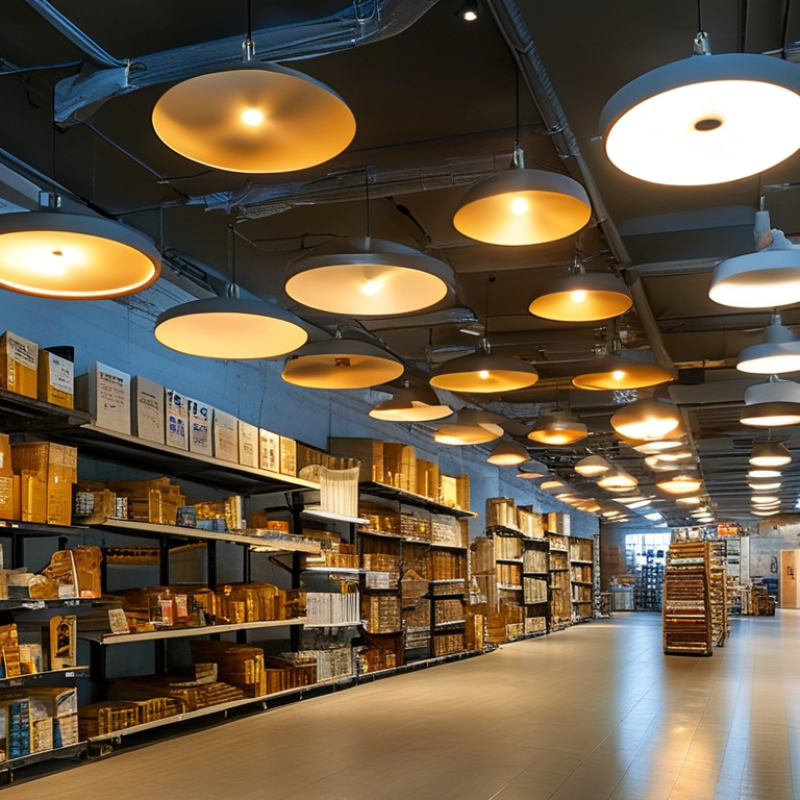
What Are Surface Mounted Lights and Where Are They Used?
Surface-mounted lights are fixtures installed directly onto a ceiling or wall, rather than placed inside a recessed cavity. Their housing remains visible, often with a slim, round, square, or linear profile. This structure simplifies installation on concrete ceilings, shallow voids, and older buildings where recessed cutting is impractical.
They are used in homes, offices, retail spaces, hotels, schools, corridors, stairwells, and light industrial areas. In my project experience, they work especially well where maintenance access matters. A surface fixture can often be removed without opening the ceiling.
Wet or dusty locations require suitable IP protection, while offices need controlled glare and comfortable color rendering. A bright fitting is not automatically a good fitting.
The International Energy Agency’s Energy Efficiency 2023 report states that lighting represents roughly 15% of global electricity consumption. Efficient LED surface fixtures can reduce operating demand, but results depend on controls, occupancy patterns, and installation quality.
The U.S. Department of Energy’s Solid-State Lighting research reports continuing improvements in LED efficacy, with laboratory devices exceeding 200 lumens per watt under specific conditions.
Real products perform differently. Buyers should check delivered lumens, efficacy, lifetime testing, driver quality, and thermal management. I would also question oversized fittings; too much brightness can create glare, wasted energy, and uncomfortable spaces. A careful trial installation is still worth the effort.
Ten Surface Mounted Light Types for Global Buyers
Ten surface-mounted light types serve very different buildings and buying conditions. Flush-mount lights suit low ceilings, while semi-flush fixtures add depth without requiring a recessed cavity. LED panels provide broad, even illumination in offices. Linear battens work well above workbenches and corridors. Wraparound fixtures soften shadows in garages and utility rooms. Bulkhead lights resist impact in stairwells and exterior passages. Vapor-tight lights protect against dust and moisture. Track-mounted lights support adjustable retail displays. Puck lights create focused task lighting under cabinets. Modular surface systems help designers arrange several light sources across large ceilings.
The International Energy Agency reports that lighting uses about 15% of global electricity. This makes efficiency more than a marketing phrase. LED surface fixtures can reduce energy demand and maintenance visits, especially in warehouses with high operating hours. The U.S. Department of Energy’s solid-state lighting reports also show continuing progress in LED efficacy and lifetime performance. Still, lumen output alone is not enough. A bright panel can feel harsh on a white desk.
Global buyers should check beam angle, color temperature, glare control, driver quality, and operating voltage. Moist areas need suitable ingress protection under IEC 60529. Ceiling structure matters too. I have seen lightweight fixtures installed with weak anchors, creating avoidable vibration and noise. That detail is easy to miss. Product data sheets may also omit real-world glare results. A small pilot installation, measured at the work plane, is often wiser than a large first order.