Seven Leading Hot Extrusion Hydraulic Press Line Configurations
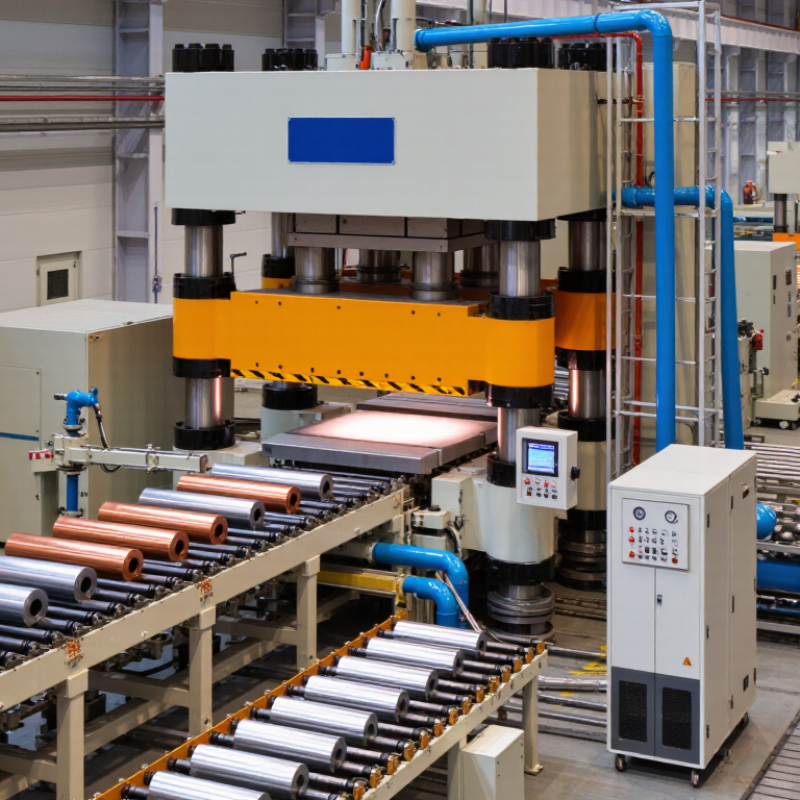
A hot extrusion line should match the alloy, billet size, profile geometry, and production rhythm. In practice, seven configurations appear most often: direct extrusion, reverse extrusion, vertical compact, horizontal high-tonnage, indirect profile, multi-station, and automated billet-to-cut lines. Each arrangement changes material flow, tooling access, and maintenance demands.
A direct extrusion line uses a heated billet, container, die, runout table, cooling section, and puller. It suits many standard profiles and offers familiar process control. Reverse extrusion reduces billet movement and can improve surface consistency for selected alloys.
A vertical compact line saves floor space, while a horizontal high-tonnage line handles larger billets and longer profiles. These choices need careful foundation planning. Vibration is easy to underestimate.
An indirect profile line can reduce friction and support difficult shapes, but its tooling system may require more specialized service skills. Multi-station lines combine heating, pressing, quenching, stretching, and cutting with limited manual handling. Automated billet-to-cut lines add sensors, transfer arms, recipe control, and guarded interfaces.
During commissioning, operators should verify billet temperature at several points, not only at the furnace display. Press speed, ram position, and die wear also need recorded checks.
No configuration is perfect. A compact line may restrict access during repairs, while a highly automated line can be difficult to troubleshoot without trained technicians. Proper guarding, interlocks, emergency stops, and documented maintenance remain essential for dependable operation.