2026 Best Carport Canopy What Type Should Buyers Choose?
Choosing the right Carport Canopy in 2026 is no longer a simple price comparison. Buyers must examine materials, weather resistance, installation methods, and everyday convenience. A canopy protecting a family SUV in Arizona faces different demands from one covering a truck in Minnesota. Sun, snow, wind, rain, and coastal moisture all leave evidence.
According to carport installation specialist David M. Smith, “The best canopy is not the largest one; it is the one matched to the site, vehicle, and local weather.” That practical view matters. A galvanized steel frame can provide strong, lasting support, while a reinforced fabric roof may offer lower cost and easier relocation. Retractable models create flexibility, but their moving parts need regular care. Portable designs seem convenient. They can also shift when anchoring is ignored.
This 2026 guide compares the main Carport Canopy types for different buyers. It considers vehicle dimensions, roof clearance, drainage, UV protection, wind exposure, and maintenance needs. Buyers should measure twice, including mirror width and door clearance. A narrow structure may protect paint but make daily access frustrating. A larger canopy may provide useful storage, yet it can require stronger foundations and more space.
There is no perfect choice. That is worth admitting. The most attractive model may not suit a harsh climate. The cheapest option may become expensive after fabric replacement or frame repairs. Smart buyers will inspect warranties, connection points, anchoring hardware, and installation instructions before deciding. A reliable canopy should feel stable, shed water cleanly, and protect the vehicle without creating new problems.
What Is a Carport Canopy and How Does It Work?
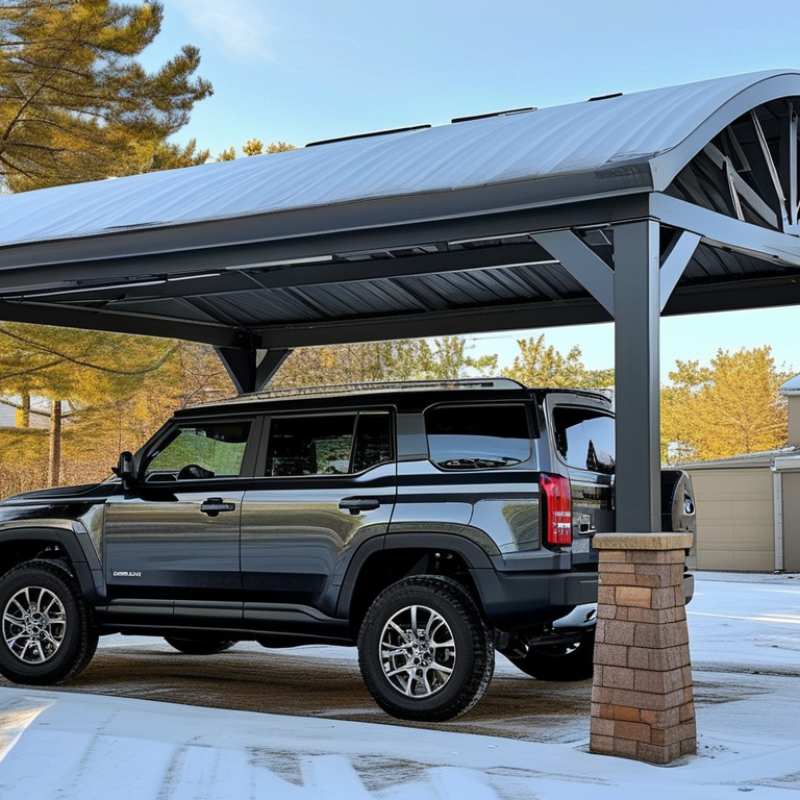
A carport canopy is a roofed outdoor structure that protects vehicles from sun, rain, snow, and falling debris. It usually combines a steel or aluminum frame, a fabric or rigid roof, vertical posts, and ground anchors. The frame carries downward loads, while anchors resist wind uplift and sideways movement. It is not simply a large tent.
When wind strikes the canopy, pressure moves across the roof and transfers into the posts. Weak anchoring can make the entire structure shift or lift. NOAA recorded 28 billion-dollar weather and climate disasters in the United States during 2023, showing why weather exposure deserves serious planning. This figure does not measure canopy failures, but it highlights changing risks from severe storms.
A buyer should check roof material, frame thickness, drainage, and rated snow or wind loads. The International Building Code also emphasizes anchorage and structural connections, though local requirements can differ. Measure the vehicle and door clearance before choosing a size. Leave working space.
Field inspections often reveal a simple mistake: owners secure the cover but ignore the feet. Concrete, ground screws, or approved anchors may perform differently in soil. A heavy-looking frame can still move. I would also question vague claims such as “all-weather” protection; they rarely explain tested loads, ultraviolet resistance, or replacement parts. The canopy works best when its design matches the site, not just the vehicle.
Which Carport Canopy Types Will Be Available in 2026?
In 2026, buyers will find four practical carport canopy types: freestanding, attached, portable, and solar-ready structures. Each suits a different driveway, budget, and weather pattern. Freestanding canopies offer flexible placement beside homes or workshops. Attached models use a building wall for support and often reduce installation space. Portable fabric canopies remain useful for seasonal storage, but wind stability needs careful attention.
The Freedonia Group’s recent shelter market analysis identifies replacement demand and residential construction as major growth drivers. Its findings support a wider move toward durable, low-maintenance outdoor structures. Steel and aluminum frames will remain popular because they resist insects, moisture, and repeated assembly. Polycarbonate roofs provide daylight beneath the canopy, while galvanized metal panels offer stronger protection against hail and heavy snow. Small details matter. Check anchor depth, roof pitch, drainage, and local wind ratings before buying.
Solar-ready canopies will attract more attention in 2026. The International Energy Agency reported that global solar capacity additions reached a record 420 gigawatts in 2023. That growth supports more parking structures designed for future photovoltaic installation. However, a solar-ready frame is not automatically a complete solar system. Electrical planning, shade analysis, and roof loading still require qualified review. Buyers may prefer integrated designs, yet replacement costs can be higher. I would not choose portability merely for convenience; a loose canopy can become a liability during severe weather.
2026 Best Carport Canopy: Which Type Should Buyers Choose?
Common carport canopy configurations available in 2026 differ mainly by vehicle capacity and clearance. The chart compares typical covered width ranges used for planning residential and recreational-vehicle shelters.
Planning reference: single-car canopies commonly provide about 10–12 ft of covered width, double-car designs about 18–24 ft, RV/high-clearance designs about 12–16 ft, and multi-bay structures about 18–24 ft per bay. Actual dimensions vary by vehicle size, local regulations, snow and wind requirements, and required side clearance.
How Should Buyers Match Canopy Design to Their Needs?
Choosing a carport canopy begins with exposure, not appearance. A coastal driveway needs corrosion-resistant frames and secure anchoring. A snowy location needs a steeper roof and verified snow-load capacity.
The American Society of Civil Engineers’ ASCE 7-22 standard links canopy design to local wind, snow, and rain loads. Buyers should request those figures before comparing fabrics or colors. NOAA’s 2023 Billion-Dollar Disasters report recorded 28 major U.S. weather events. That number makes lightweight, poorly anchored structures difficult to justify in exposed areas. Short-term savings can become expensive repairs.
Match the roof shape to daily use. A high-clearance canopy suits vans, boats, and frequent loading. A lower profile usually offers better wind resistance and less visual impact. For strong sunlight, choose UV-resistant fabric and side panels that block low-angle glare. For frequent rain, prioritize roof pitch, gutters, and a clear drainage path. Think about snow removal, too. Many buyers forget it.
I would not trust a generic “all-weather” label. Ask for tested load ratings, material thickness, warranty terms, and installation instructions. The Federal Emergency Management Agency reports that stronger building-code practices can reduce disaster losses substantially over time. Canopies are not complete buildings, but the principle still applies. Local inspection requirements may vary. That uncertainty deserves a direct question before purchase.
What Materials, Features, and Safety Standards Matter Most?
2026 Best Carport Canopy: What Type Should Buyers Choose?
A reliable carport canopy starts with its frame, not its appearance. Galvanized steel usually offers strong resistance to rust and twisting. Aluminum is lighter, but it may flex more under heavy wind or snow. The cover should resist ultraviolet damage, tearing, and water pooling. Polyethylene and polyester fabrics can perform well when their thickness and coating are clearly stated. Avoid vague claims such as “all-weather.” They prove little.
Safety depends on more than material choice. Check the published wind and snow-load ratings before buying. These ratings should match your local conditions, not just average weather. Strong ground anchors matter, especially on soil that becomes soft after rain. A canopy with open sides can reduce wind pressure, but poor anchoring remains dangerous. Look for tested structural components, clear assembly instructions, and documented compliance with applicable building or safety standards. Requirements vary by location. Verify them with local authorities or a qualified installer.
Tips: Measure the vehicle, door clearance, and drainage path first. Inspect every bolt after the first storm. Keep fabric tight, but do not overtension it. Remove accumulated snow promptly. I would also allow extra clearance for future vehicles; my first estimate was too narrow. A cheaper canopy may appear practical, yet weak anchors or difficult replacement parts can create higher costs later. Read the warranty carefully, especially its exclusions for wind, snow, and improper installation.
How Can Buyers Compare Cost, Installation, and Long-Term Value?
For the 2026 best carport canopy, buyers should compare installed cost, not the advertised frame price. The 2024 Angi State of Home Spending Report shows that homeowners remain highly sensitive to project costs and financing pressure. Request three written quotes with identical dimensions, roof material, anchoring, delivery, permits, and site preparation. A $4,800 canopy can become $7,200 after concrete, drainage, and labor. Ask what happens when the ground is uneven.
Installation quality affects long-term value. NOAA’s 1991–2020 Climate Normals provide local snowfall, rainfall, and wind data for design decisions. FEMA’s National Risk Index also identifies county-level exposure to hazards, including severe wind and flooding. Use these records when checking roof load, post spacing, corrosion protection, and anchoring depth. A light canopy may suit a dry region but perform poorly under wet snow. That is not obvious from showroom photos.
The 2025 RSMeans Construction Cost Data separates materials, labor, equipment, and regional cost differences. Buyers can use that structure to test contractor quotes instead of trusting one total figure. Compare repainting, bolt replacement, rust treatment, roof-panel life, and drainage maintenance over ten years. Add resale usefulness carefully; not every buyer values covered parking equally. I would also inspect the first installation after one storm. Small movement or ponding water can reveal expensive weaknesses early.