| Super-Mirror Polished | 304 or 316L | Progressive mechanical polishing with fine abrasive finishing | 90–95% at the specified measurement angle and wavelength | 0.02–0.05 μm | Very good; 316L provides improved resistance to chlorides and aggressive process environments | Optical housings, precision decorative panels, high-end interior surfaces, cleanroom equipment | Requires strict control of scratches, waviness, inclusions, and handling marks |
| 8K Mirror Finish | 304, 316L, or 430 | Multi-stage buffing and polishing to a bright mirror appearance | Typically 90–94% on a well-prepared surface | 0.03–0.08 μm | Good for 304 and 430 in indoor environments; very good for 316L in chloride-bearing environments | Elevator panels, architectural cladding, food-service equipment, display and decorative components | Reflectivity depends strongly on substrate quality, polishing direction, and measurement geometry |
| Electropolished Mirror | 316L or 304 | Electrochemical leveling after mechanical preparation | 90–93% when preceded by a high-quality mirror polish | 0.02–0.08 μm | Excellent passive surface; reduced microscopic roughness can improve cleanability | Pharmaceutical equipment, semiconductor systems, hygienic piping, medical and laboratory components | Electropolishing improves surface cleanliness and passivation but does not automatically create a mirror finish |
| Bright-Annealed Mirror | 304, 316L, or 430 | Cold rolling followed by bright annealing in a controlled protective atmosphere | 90–92% for a bright, uniform strip surface | 0.05–0.10 μm | Good to very good, depending on grade and environment | Automotive trim, kitchen equipment, heat exchangers, appliance panels, precision strip products | Usually offers high uniformity and low maintenance; visible surface defects can be difficult to repair |
| Ultrafine Polished Finish | 304L or 316L | Fine abrasive polishing followed by final lapping or precision buffing | 91–96% on small, carefully prepared components | Below 0.05 μm | Very good; 316L is preferred where pitting or chemical exposure is a concern | Precision instruments, sensor housings, vacuum hardware, laboratory components | Highest appearance and roughness performance, but usually higher processing cost and tighter inspection requirements |
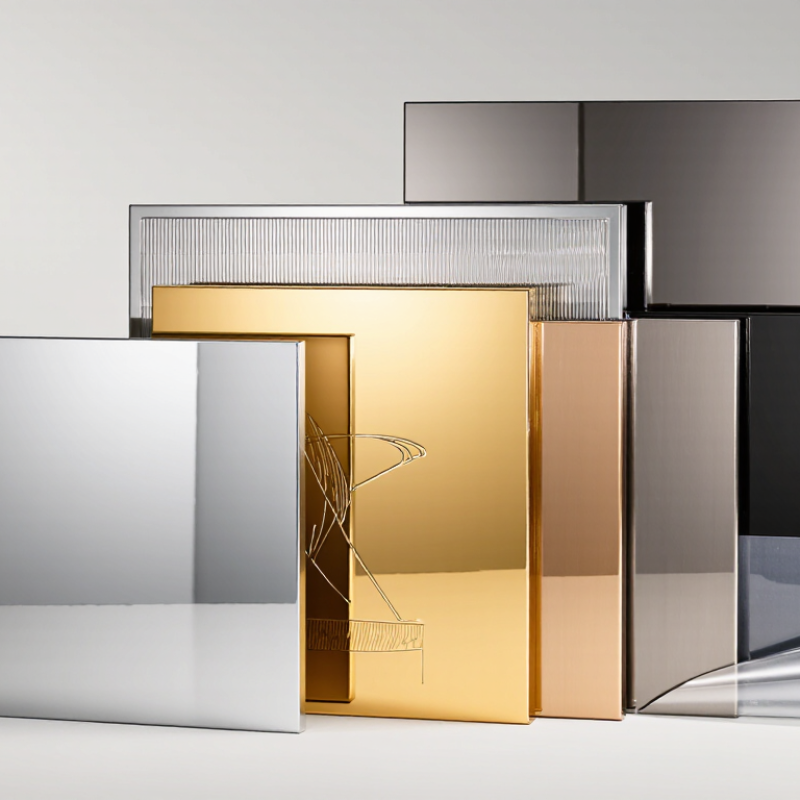
| Decorative Mirror Sheet | 304 or 430 | Commercial mirror polishing with protective film applied after finishing | 90–93% on visually uniform sheet areas | 0.05–0.10 μm | Good for general architectural and indoor use; 304 is generally more resistant than 430 in humid areas | Wall panels, columns, furniture details, signage, retail interiors | Protection during forming, transport, and installation is essential to prevent surface damage |