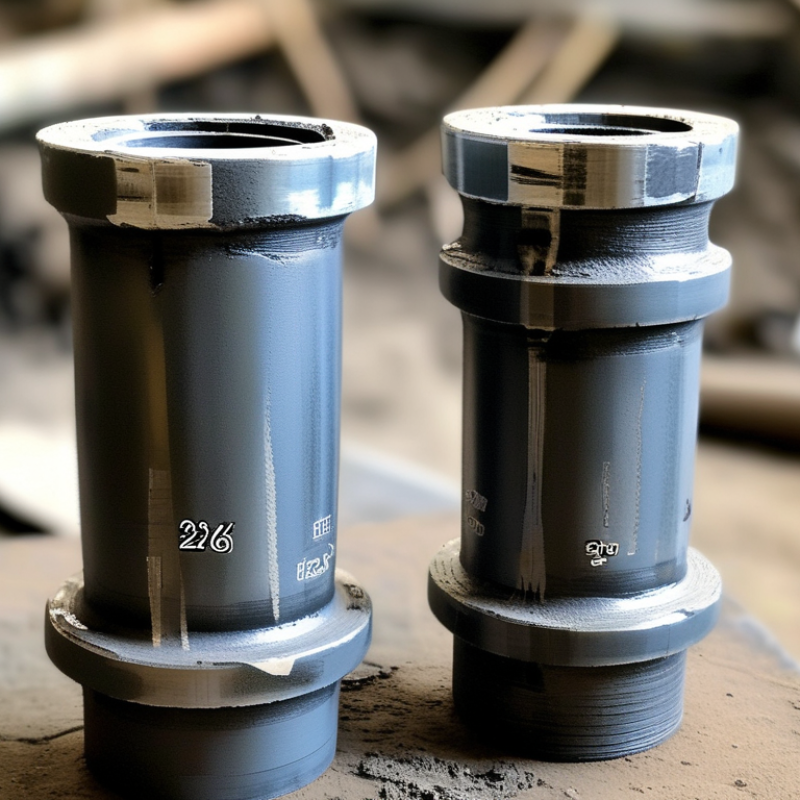
| Concentric Reducing Sleeve | A single fitting with two coaxial socket ends of different nominal sizes. The pipe centerline remains aligned through the fitting. | Examples include 63 × 32 mm 90 × 63 mm 110 × 63 mm 160 × 110 mm | Reducing a polyethylene service or distribution pipeline while maintaining a straight centerline. | Compact layout, simple alignment, broad suitability for water, gas, and industrial PE piping when the fitting is approved for the service. | Both pipe ends must be fully inserted to the marked depth. Pipe outside diameter, material compatibility, SDR range, scraping, cleaning, clamping, fusion voltage, and cooling time must follow the fitting manufacturer’s procedure. | ISO 4427, EN 12201, EN 1555, ISO 4437, ASTM F1055, and applicable national requirements. |
| Eccentric Reducing Sleeve | A reducing fitting in which the smaller and larger sockets have offset centerlines rather than a common axis. | Normally supplied in selected size combinations rather than every standard size pair. Custom availability may apply | Applications where maintaining a specific top or bottom pipe elevation is more important than keeping both pipe centerlines concentric. | Can help control external clearance, invert level, or drainage geometry in restricted installations. | Orientation must be clearly marked before fusion. It is less commonly stocked than concentric designs, so dimensional drawings and project approval should be checked in advance. | Product-specific compliance with ISO, EN, ASTM, or local PE piping standards should be verified before use. |
| Short-Pattern Reducing Sleeve | A compact concentric reducer with a relatively short overall length and short socket zones. | Often used for compact transitions such as 63 × 32 mm or 90 × 63 mm | Repairs, service connections, meter assemblies, valve chambers, and installations with limited available space. | Requires less trench or chamber length and can reduce the number of separate fittings in a compact assembly. | Short fittings provide less external working length. The fusion machine, clamps, pipe alignment, and minimum straight-pipe requirements must be suitable for the fitting dimensions. | Applicable PE pressure-piping and electrofusion-fittings standards, including ISO 8085, EN 12201, EN 1555, and ASTM F1055 where applicable. |
| Long-Pattern Reducing Sleeve | A reducer with extended body length or longer socket zones compared with a compact pattern. | Commonly selected for larger transitions, higher handling stability, or systems requiring additional straight length. | Buried mains, industrial piping, water networks, gas distribution, and installations where alignment and mechanical restraint are important. | Provides more working length for positioning and may simplify alignment of larger-diameter pipes. | It needs more installation space. Longer body length does not by itself increase allowable pressure; pressure rating depends on the fitting design, material, SDR compatibility, and applicable approval. | ISO 4427, EN 12201, EN 1555, ISO 4437, ASTM F1055, and project-specific specifications. |
| Service-Line Reducing Sleeve | A small-diameter electrofusion reducing socket intended to connect a service pipe to a smaller branch or service line. | Typical service combinations include 32 × 20 mm 40 × 25 mm 63 × 32 mm | House connections, irrigation laterals, utility service lines, and small-diameter water or gas branches. | Supports direct size reduction in confined service trenches and can be integrated with other electrofusion service fittings. | Confirm that the fitting is rated for the intended medium. Small fittings are sensitive to pipe ovality, surface contamination, insertion depth, and movement during fusion and cooling. | EN 12201 or ISO 4427 for water; EN 1555 or ISO 4437 for gas; local utility requirements may also apply. |
| Heavy-Duty Reducing Sleeve | A reinforced or robustly dimensioned reducing socket designed for demanding service conditions or larger-diameter PE systems. | Usually selected for medium and large transitions such as 160 × 110 mm 250 × 160 mm 315 × 250 mm | Industrial water, wastewater, mining, process piping, and large buried pressure networks. | Improved handling stability and greater resistance to installation loads when correctly designed and supported. | Heavy-duty construction does not replace proper bedding, anchoring, alignment, or pressure design. Large fittings may require specialized clamps, hydraulic alignment tools, and controlled cooling. | Applicable ISO, EN, ASTM, and project specifications for PE electrofusion fittings; verify pressure class and SDR range from the technical documentation. |
| Transition Reducing Sleeve | An electrofusion PE socket on one side combined with a mechanically or metallurgically connected transition end, such as a threaded, flanged, or metallic connection. | Available in selected PE-to-metal size combinations. PE × threaded end PE × flanged end | Connecting a PE pipeline to valves, meters, pumps, metallic pipework, equipment, or legacy piping with a different connection system. | Combines the leak-resistant benefits of PE electrofusion with compatibility for non-PE equipment and pipe systems. | Metal components may have different pressure, corrosion, temperature, and installation requirements. Avoid transferring excessive bending or torsional loads to the PE fusion joint. | PE piping standards plus the applicable flange, thread, valve, or metallic transition-component standard. |
| Gas-Service Reducing Sleeve | A reducing electrofusion socket specifically approved and marked for polyethylene gas distribution service. | Size pairs depend on the approved gas system and national regulations. Use only approved configurations | Natural gas and other regulated gaseous-fuel distribution systems using compatible PE pipe. | Provides a controlled electrofusion joint for gas networks when installed by qualified personnel using approved equipment. | Gas approval is not automatically implied by a water-rated fitting. Check gas-specific markings, operating pressure, pipe SDR, traceability, electrofusion control parameters, and inspection requirements. | EN 1555, ISO 4437, ASTM F1055, and the applicable gas-network regulations or utility specifications. |
| Water-Service Reducing Sleeve | A reducing electrofusion socket approved for potable water, raw water, or other water-service applications as specified by its documentation. | Common PE network transitions include 110 × 63 mm 160 × 90 mm 250 × 160 mm | Potable-water distribution, irrigation, wastewater, and general water-pressure pipelines, subject to material approval. | Supports reliable size transitions without introducing a separate mechanical joint between compatible PE components. | Potable-water contact approval, pressure class, SDR compatibility, disinfecting procedure, and cleanliness requirements must be confirmed for drinking-water systems. | ISO 4427, EN 12201, ASTM F1055, and relevant drinking-water or local regulatory requirements. |
| Repair or Cut-In Reducing Sleeve | A reducing socket selected for retrofit work where existing pipe sections have been cut, replaced, or reconfigured. | Determined by the measured outside diameters and the available repair length. Project-specific selection | Pipeline modification, localized repair, replacement of damaged sections, and connection of new branches to existing PE systems. | Allows a size transition during repair without replacing an unnecessarily long section of pipeline. | Existing pipe must be exposed, round, clean, and free from damage beyond the manufacturer’s allowable limits. Confirm cut length, insertion depth, pipe movement, isolation, and pressure testing requirements before fusion. | Applicable PE electrofusion standards, utility procedures, and the approved repair method for the pipeline service. |