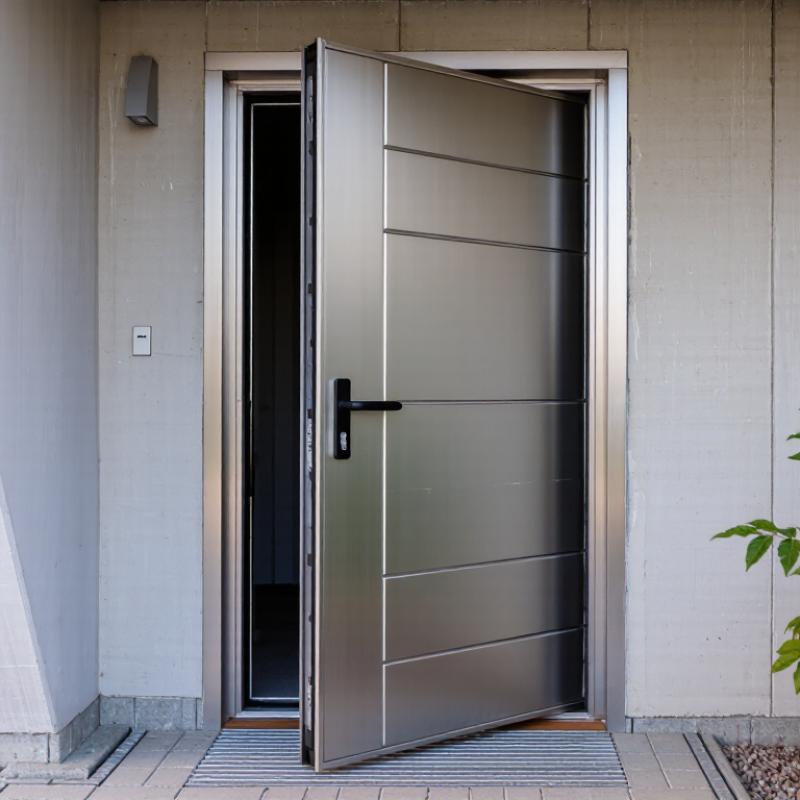
2026 Best Metal Front Door Manufacturers for Global Buyers

Selecting the best Metal Front Door manufacturer requires more than comparing photographs, prices, or catalogue promises. Global buyers need verified performance, consistent production, and dependable export support. A door should open smoothly after years of use, seal tightly during heavy rain, and resist surface damage near coastal air.

The 2024 Global Status Report for Buildings and Construction, published by UNEP, states that buildings consume about 32% of global energy and create roughly 34% of global carbon emissions. This places building-envelope performance under serious scrutiny. Entry doors are only one component, but weak seals, thermal bridges, and poor installation can waste energy. The Freedonia Group’s 2024 residential windows and doors analysis also highlights replacement demand, durability, design flexibility, and energy efficiency as important market factors. These findings support a practical purchasing approach.

This guide evaluates manufacturers through measurable evidence. Key checks include steel or aluminum grade, core insulation, hardware quality, coating thickness, air leakage, water resistance, and warranty terms. Buyers should request test reports, factory photographs, sample corners, and recent project references. Depending on the destination, relevant standards may include ASTM E283, ASTM E331, ASTM E330, or European EN 14351-1 requirements. Certification alone is not enough. Installation matters greatly. A premium door can still fail when the frame is poorly anchored or the threshold is incorrectly sealed.

The strongest manufacturers explain limitations clearly. They provide drawings, lead times, packaging details, and after-sales procedures. No ranking is perfect. Some public claims remain difficult to verify. That is why this 2026 review favors traceable evidence over attractive marketing.

2026 Best Metal Front Door Manufacturers for Global Buyers

Metal Front Door Manufacturers: Product Scope and Market Role

Metal front door manufacturers now serve more than residential entrances. Their product scope covers steel and aluminum slabs, insulated cores, frames, hinges, locks, glazing, and protective finishes. Custom orders may include thermal breaks, fire-rated assemblies, acoustic layers, and oversized openings. The range is broad. Grand View Research’s 2024 analysis projects the global doors market to grow at nearly 5% annually through 2030. Renovation demand and stricter building performance targets support this expansion.

Manufacturers also play a risk-control role for global buyers. They convert architectural requirements into tested assemblies, not attractive panels alone. The International Energy Agency reports that buildings consume about 30% of global final energy. Therefore, door insulation, air leakage, and installation quality deserve serious attention. Buyers should request U-values, test methods, salt-spray results, hardware schedules, and section drawings. Small details matter. A weak threshold can reduce an otherwise strong door’s performance.

In procurement practice, reliable manufacturers manage material traceability, batch inspection, packaging, and replacement parts. They should explain coating thickness, steel grade, core density, and expected maintenance. Export experience also affects lead times and documentation accuracy. Yet the sector is not perfectly transparent. Performance claims can outrun field evidence, especially when laboratories and installation conditions differ. That gap matters. Global buyers should compare declared values with independent reports, local climate needs, and installer capability before approving production.

2026 Best Metal Front Door Manufacturers for Global Buyers - Metal Front Door Manufacturers: Product Scope and Market Role
Product Dimension Typical Product Scope Relevant Technical Characteristics Market Role for Global Buyers
Main Door Materials Galvanized steel, stainless steel, aluminum, and steel-aluminum composite constructions. Material selection affects corrosion resistance, structural strength, weight, thermal performance, appearance, and maintenance requirements. Manufacturers provide material options suited to coastal, urban, commercial, residential, and high-traffic environments.
Door Configurations Single-leaf, double-leaf, unequal double-leaf, pivot, sliding, and paired entrance systems. Configuration is generally determined by opening width, traffic flow, accessibility needs, structural conditions, and project design. Configuration flexibility enables suppliers to serve apartment buildings, villas, offices, hospitality projects, and public facilities.
Construction Types Hollow metal doors, insulated metal doors, panel doors, glazed metal doors, and custom fabricated entrance units. Insulated cores can improve thermal and acoustic performance; glazed sections require suitable safety glazing and frame design. Manufacturers bridge the requirements between decorative residential entrances and durable architectural or commercial systems.
Surface Finishes Powder coating, wet paint, brushed stainless steel, polished stainless steel, anodized aluminum, and wood-effect finishes. Finish systems should be selected according to exposure conditions, color requirements, cleaning frequency, and expected service life. Finish customization allows importers and project contractors to match local architectural styles and planning requirements.
Thermal Performance Thermally improved frames, insulated door leaves, weather seals, and threshold solutions. Performance depends on the complete door assembly, including leaf, frame, glazing, seals, threshold, installation, and surrounding wall. Thermal options are important for buyers serving regions with hot summers, cold winters, or energy-efficiency regulations.
Weather Resistance Exterior-grade steel and aluminum doors with protective coatings, drainage details, gaskets, and corrosion-resistant hardware. Durability is influenced by coating quality, substrate preparation, water management, exposure level, and maintenance practices. Suppliers help global buyers adapt door specifications to humid, rainy, high-salt, high-UV, and dusty climates.
Security Features Multi-point locking systems, reinforced door leaves, security cylinders, anti-pry details, concealed hinges, and safety glazing options. Security performance varies by the complete assembly and should be verified through applicable test reports or project specifications. Security-focused products support residential entrance, multi-family housing, office, retail, and controlled-access applications.
Fire and Smoke Applications Fire-rated metal door assemblies, smoke-control doors, fire-rated frames, and compatible hardware sets. Fire performance applies to a tested and correctly installed assembly, not only to the door leaf. Ratings and test methods vary by jurisdiction. Manufacturers can support code-sensitive projects when buyers request documented ratings, approved hardware, and installation requirements.
Accessibility and Safety Low-resistance opening systems, suitable clear widths, lever handles, vision panels, safety glazing, and threshold options. Accessibility requirements depend on local building codes and project use; clear opening, maneuvering space, hardware, and closing force are key considerations. Compliance-oriented design helps contractors and developers meet public-building, hospitality, healthcare, and residential access requirements.
Customization Capability Non-standard sizes, decorative panels, vision panels, transoms, sidelights, hardware preparation, colors, and digital drawings. Custom orders require confirmed opening dimensions, wall conditions, handing, swing direction, hardware requirements, and finish schedules. Customization is a major differentiator for project-based buyers who need coordinated architectural packages rather than standard retail units.
Hardware Integration Hinges, closers, panic exit devices, access-control preparation, pull handles, locks, door viewers, and weather seals. Hardware compatibility must be checked against door weight, usage frequency, security level, fire requirements, power supply, and local code. Integrated hardware coordination reduces installation conflicts and supports complete-door procurement for international projects.
Quality Documentation Technical drawings, material declarations, finish specifications, installation instructions, packing lists, and inspection records. Documentation should identify dimensions, tolerances, materials, hardware, finishes, testing scope, and packaging requirements. Clear documentation helps importers, architects, quantity surveyors, customs agents, and installers manage cross-border procurement.
Testing and Compliance Testing may cover fire resistance, air permeability, water tightness, wind load, security, acoustics, thermal performance, and corrosion resistance. Applicable standards differ by destination market; buyers should confirm whether reports are valid for the intended product configuration and jurisdiction. Compliance-ready suppliers reduce approval risk and help project teams align products with local building regulations and tender requirements.
Production Model Standard catalog production, made-to-order manufacturing, project batch production, and fully custom fabrication. Production planning typically depends on approved drawings, material availability, finish selection, hardware confirmation, and order quantity. Different production models allow buyers to balance unit cost, customization, minimum order quantity, and delivery scheduling.
Export and Logistics Support Protective packaging, palletization, container loading plans, shipping marks, export documentation, and replacement-part coordination. Metal doors require protection against scratching, moisture, deformation, and hardware damage during handling and international transport. Logistics capability is essential for distributors and contractors managing containerized shipments, customs clearance, and multi-site deliveries.
Primary Buyer Groups Importers, distributors, door contractors, architects, developers, general contractors, and building-material wholesalers. Each buyer group usually prioritizes a different combination of price, compliance, customization, delivery reliability, technical support, and after-sales service. Manufacturers serve as production partners across both recurring distribution programs and one-time architectural projects.
Common End-Use Sectors Residential housing, apartment developments, hotels, offices, retail spaces, education, healthcare, industrial buildings, and public facilities. Performance requirements vary according to occupancy, traffic intensity, security exposure, fire strategy, climate, and maintenance conditions. Broad application coverage allows manufacturers to adapt product specifications to different building types and procurement standards.
Buyer Evaluation Criteria Material quality, manufacturing consistency, testing evidence, customization control, communication, packaging, delivery performance, and warranty terms. A reliable evaluation should compare complete assemblies, documented specifications, sample quality, quality-control procedures, and total landed cost. Structured supplier evaluation helps global buyers identify suitable production partners without relying solely on unit price.

Key Materials, Designs, and Manufacturing Standards

Global buyers should examine a metal front door beyond its surface appearance. Galvanized steel offers strong impact resistance and stable performance in demanding climates. Aluminum reduces weight and resists corrosion near coastal areas. Stainless steel suits premium details, but it increases material and machining costs. Door cores also matter. Mineral wool improves fire resistance, while insulated foam supports thermal performance.

Design choices should match the building and climate. Flush panels create a clean commercial look. Slatted or perforated panels provide texture, but they need careful drainage and cleaning access. Thermal breaks reduce condensation around aluminum frames. Multi-point locks can improve security when the frame and hinges are equally strong. Small gaps matter. Poorly sealed thresholds often cause drafts and water entry.

Reliable manufacturers control more than welding quality. They should document steel thickness, coating type, surface preparation, and hardware testing. Powder coating requires suitable pretreatment, especially in humid or salty environments. Buyers can request air, water, wind-load, and cycle-test reports from competent laboratories. Relevant regional standards may include EN or ASTM methods, depending on the installation market. ISO 9001 can indicate organized production, but it does not prove every door meets performance requirements. A polished sample may hide weak internal reinforcement. That is why factory inspections and pre-shipment checks remain valuable, even when the supplier communicates confidently.

How to Evaluate Global Metal Door Manufacturers in 2026

When evaluating global metal door manufacturers in 2026, inspect more than catalog images. Request a full material specification for the steel, aluminum, coatings, cores, hinges, locks, and glass. Ask for evidence. Reliable suppliers provide traceable batch records, production drawings, and independent test reports. These documents should match the performance requirements of your destination market.

Order a working sample before approving a large shipment. Check weld uniformity, frame alignment, hinge movement, gasket compression, and coating thickness. Leave the sample outdoors for several weeks if possible. Watch for bubbling, rust at cut edges, water entry, or difficult closing. Samples reveal flaws. A factory may pass a showroom inspection yet struggle with packaging or repeated production. That gap deserves honest attention.

Assess manufacturing experience through factory audits, quality-control procedures, and recent export references. Ask how workers inspect dimensions, surface defects, hardware installation, and final packing. Strong manufacturers use calibrated tools and record corrective actions instead of hiding mistakes. Confirm their ability to meet custom sizes, thermal targets, wind loads, fire classifications, and accessibility requirements. Requirements vary by country, so independent local review remains important. A low price can reflect efficient production, but it can also hide thinner materials or weaker after-sales support. Check lead times, replacement procedures, communication response, and warranty limits in writing. I would not rely on promises alone. Reliability is proven through repeatable records, realistic samples, and clear accountability.

Top Manufacturer Profiles by Region and Product Strength

2026 Best Metal Front Door Manufacturers for Global Buyers

Regional capability matters more than a polished catalog. European manufacturers often excel in thermally broken steel doors, tested airtightness, and restrained architectural finishes. North American producers commonly focus on reinforced entry systems, insulated cores, and wider custom dimensions. In Asia, high-volume factories may offer stainless steel, aluminum-steel hybrids, and competitive tooling. According to Grand View Research, the global doors market was valued at about USD 207.6 billion in 2023, with growth projected through 2030. Metal entry doors remain attractive because they combine security, durability, and design flexibility.

Product strength should be verified, not assumed. Look for tested U-values, air leakage results, water resistance, cycle testing, and corrosion classifications. The World Steel Association reported global crude steel production of approximately 1.89 billion tonnes in 2023. That scale supports broad material availability, but it does not guarantee consistent fabrication. Request sample welds, powder-coating records, hinge load data, and installation drawings. Regional weather also changes the specification. Coastal buyers need stronger corrosion protection. Cold-climate projects need thermal breaks and insulated thresholds. Some manufacturers still publish vague performance claims. That is a warning sign.

Tips: Compare manufacturers by verified tests, not factory size. Ask for references from similar climates. Review packaging before approval. A beautiful door can still arrive damaged or fit poorly. Allow time for local code checks and field measurements. Sources: Grand View Research, Doors Market Analysis, 2024; World Steel Association, World Steel in Figures 2024.

International Sourcing, Certification, Shipping, and After-Sales Support

2026 Best Metal Front Door Manufacturers for Global Buyers

International sourcing now depends on evidence, not attractive catalog photos. The ISO Survey 2023 recorded more than 1.2 million ISO 9001 certificates worldwide. Yet certification alone does not prove consistent door quality. Ask manufacturers for factory inspection records, steel grade reports, coating thickness results, and batch-level quality checks. For exterior doors, request test evidence for air leakage, water penetration, wind load, fire performance, and security resistance. Requirements vary by destination. A door accepted in one market may fail another’s installation rules. That detail is often missed.

Tips: Build a compliance file before ordering. Include drawings, tolerances, certificates, packing photos, and approved samples. Use Incoterms that clearly assign insurance, customs, and damage responsibility. The World Bank’s Logistics Performance Index 2023 evaluates customs, infrastructure, international shipments, tracking, and delivery timeliness. These factors matter when shipping heavy doors with glass, frames, and hardware. Confirm crate dimensions and gross weight before booking freight. One wrong measurement can increase costs sharply.

After-sales support should be measurable. Require spare-hardware availability, installation videos, response-time commitments, and a written claim process. Record serial numbers and inspection photos before dispatch. This is practical experience, not paperwork theater. Still, I would not trust every factory promise. Audit communication during a small trial order. A supplier that handles a minor defect honestly may be safer for a long-term project.

2026 Global Metal Front Door Sourcing Priorities

Indicative procurement benchmarks for international buyers covering certification, logistics, and after-sales support.

Certification readiness, export documentation, delivery reliability, installation guidance, warranty clarity, and spare-parts availability are commonly evaluated when sourcing metal front doors internationally. The percentages represent practical planning benchmarks rather than data from any individual manufacturer.

Find the Right Repair Product for Your Project

Need to find the most appropriate product for the needs of your project? We can help because we have over 70 years of experience servicing the industry with every kind of project, from Do-it-yourself projects to large skyscrapers. Package Pavement has the experience, the knowledge and the products to help every project succeed.

Quikrete Repair Products
Legend
Package Pavement has two convenient locations in Stormville, NY (Dutchess County) and Ravena, NY (Greene County) to serve the Northeastern Region with bagged concrete, blacktop, mortar, and repair products. This map gives a general idea of where we service and the product lines we offer.
Package Pavement Products
Quikrete Products
Spec Mix Products
map

Our Brands Websites