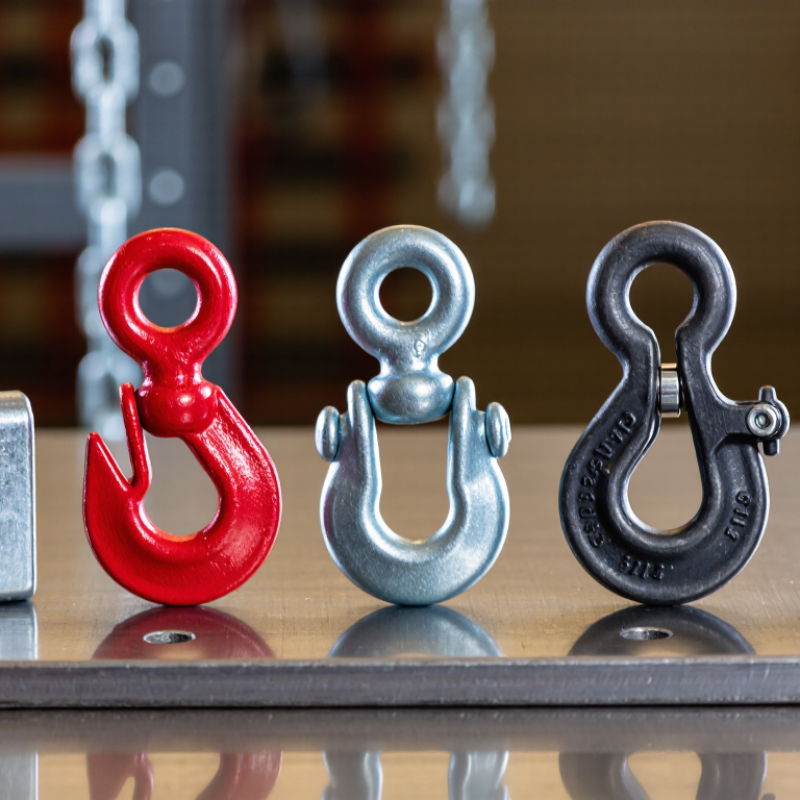
| Clevis Grab Hook | Clevis pin connects directly to a short-link lifting chain. | Commonly Grade 80 or Grade 100 alloy steel chain, matched to the hook size. | Shortening chain slings, securing loads, logging, material handling, and general overhead lifting. | Typically about 1.0–15.0 metric tonnes, depending on chain diameter, grade, design, and lifting angle. | Compact design; fast chain attachment; suitable for many chain sling systems. | Requires correct pin installation and a compatible chain size; improper loading can reduce capacity. |
| Eye Grab Hook | Eye connects to a master link, connecting link, shackle, wire-rope sling, or other rated component. | Usually used with Grade 80 or Grade 100 chain of the specified diameter. | Adjustable-length chain slings, rigging assemblies, load restraint, and permanent or semi-permanent lifting setups. | Typically about 1.0–20.0 metric tonnes in commonly supplied sizes; the exact limit depends on the complete assembly. | Versatile connection options; convenient for custom sling fabrication and replacement. | More assembly components may be required; every connection must have a compatible rated capacity. |
| Sling Grab Hook | Eye or clevis attachment connects to a chain sling; the chain seats in the hook bowl or cradle. | Designed for the stated size of Grade 80 or Grade 100 lifting chain. | Chain sling shortening, load positioning, lifting beams, machinery handling, and general rigging. | Commonly about 1.0–15.0 metric tonnes, with capacity dependent on size, grade, and loading method. | Provides a controlled chain-bearing area and can help reduce accidental chain disengagement when correctly loaded. | Must not be side-loaded, tip-loaded, or loaded on the hook point unless specifically designed for that use. |
| Locking Grab Hook | Eye or clevis connection with a latch, locking mechanism, or chain-retention feature. | Normally matched with Grade 80 or Grade 100 chain and the manufacturer's specified link diameter. | Applications where vibration, movement, or load geometry may increase the risk of chain release. | Often available in the approximate range of 1.0–12.5 metric tonnes; the locking mechanism does not automatically increase the WLL. | Improved chain retention; useful for mobile equipment, transport-related lifting, and dynamic work environments. | The locking device must be fully engaged and inspected; it cannot compensate for overload or incorrect loading. |
| Foundry or Heavy-Duty Grab Hook | Usually an eye or clevis attachment designed for high-temperature or heavy-industrial rigging systems. | Heavy-duty alloy chain, generally selected according to the hook and chain manufacturer's specifications. | Steel handling, foundries, shipyards, heavy fabrication, construction, and demanding industrial lifting. | Commonly about 5.0–30.0 metric tonnes; higher capacities require engineered lifting systems and documented certification. | Large load-bearing section; robust construction; suitable for harsh industrial environments. | Heavier and less maneuverable; heat exposure, shock loading, and abrasive conditions can reduce service life. |
| Slip-On or Slip-Through Grab Hook | Hook slips over or captures a selected chain link without requiring a permanent end connection. | Only suitable for the chain diameter and link geometry specified for the hook. | Temporary chain shortening, quick load adjustment, tie-down work, and selected non-permanent rigging tasks. | Typically about 0.5–8.0 metric tonnes; capacity can be substantially affected by link position and loading angle. | Fast adjustment; useful when frequent length changes are required. | Higher risk of incorrect seating; not suitable for every overhead lifting application or for unapproved chain types. |
| Self-Locking Grab Hook | Integrated latch or locking gate closes automatically or remains locked during normal loading. | Matched Grade 80 or Grade 100 chain with the correct link diameter and profile. | Overhead lifting, construction, maintenance, and applications requiring additional protection against unintentional release. | Commonly about 1.0–20.0 metric tonnes, depending on hook size, chain grade, and design certification. | Enhanced retention; reduces the chance of the chain leaving the hook during handling when properly installed. | The lock must be kept clean and functional; the hook still requires correct seating and regular inspection. |