| PLA-based nonwoven | Spunbond, meltblown, needle-punched, or composite structures | Polylactic acid, commonly produced from fermented plant-derived sugars; additives, coatings, binders, or reinforcing fibers may be present | PLA content alone does not prove that the finished fabric is compostable. Colorants, finishes, laminates, and blended fibers can change the result. | Potentially suitable for industrial compostability assessment when the complete finished article meets disintegration, biodegradation, ecotoxicity, and heavy-metal requirements under EN 13432. | Potentially suitable for ASTM D6400 evaluation when the complete product, including additives and coatings, meets the standard’s industrial composting requirements. | Functional unit, resin and additive inputs, agricultural inputs, energy mix, fabric weight, production yield, transport, packaging, and end-of-life scenario. Check whether biogenic carbon is reported consistently. | Request a certificate or test report for the exact fabric construction; verify product thickness, basis weight, color, coatings, and blend ratio against the tested sample. |
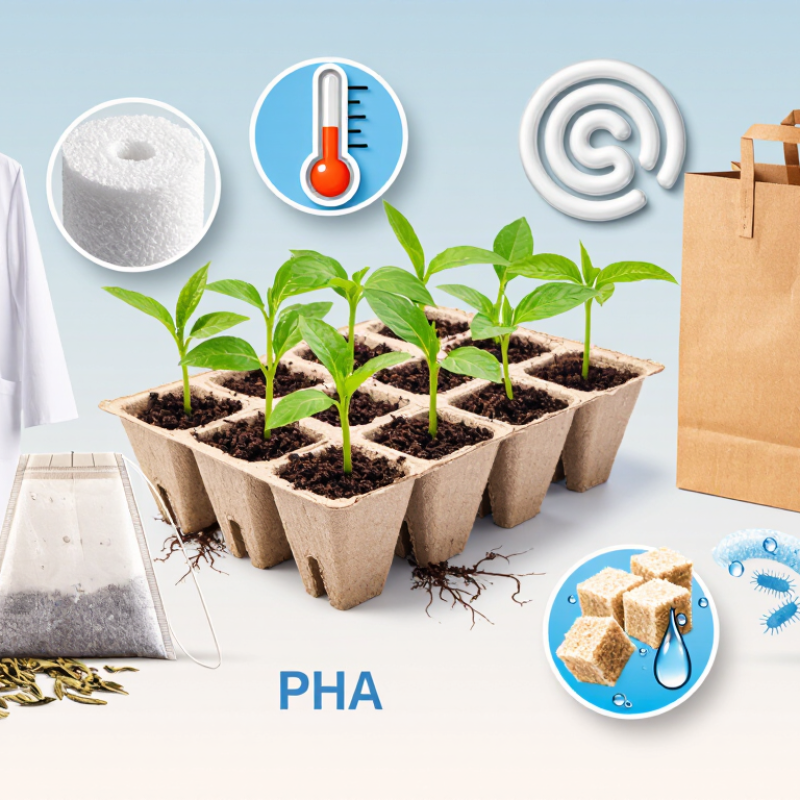
| PHA-based nonwoven | Melt-processed webs, spunbond structures, and blends | Polyhydroxyalkanoates produced by microbial fermentation; grade and formulation strongly affect processing and degradation behavior | “Bio-based” and “biodegradable” are separate claims. A PHA grade should not be assumed to pass a specific compostability standard without testing. | Can be evaluated against EN 13432 as a finished product. The standard does not approve a polymer family automatically. | Can be evaluated against ASTM D6400 for industrial composting; the test evidence must cover the actual finished construction. | Feedstock and fermentation energy, nutrient inputs, solvent or chemical use, drying energy, yield, allocation method, and treatment of production residues. | Check independent laboratory results for biodegradation and disintegration, plus ecotoxicity and regulated-metal data where applicable. |
| Cellulose or wood-pulp nonwoven | Airlaid, wetlaid, spunlace, tissue-like, or cellulose-fiber composites | Regenerated cellulose, wood pulp, or other cellulose fibers; may include wet-strength resins, binders, dyes, or synthetic reinforcement | Uncoated cellulose is generally biodegradable, but the finished fabric may not meet compostability requirements if it contains persistent binders, synthetic fibers, or unsuitable finishes. | The finished article must satisfy EN 13432 criteria; cellulose origin alone is not certification evidence. | The finished article may be tested under ASTM D6400 if it is intended for industrial composting and contains no disqualifying components. | Forest-management or agricultural sourcing, pulping or regeneration chemicals, water and energy use, wastewater treatment, transport, and land-use assumptions. | Request fiber composition, binder and finish disclosure, pulp sourcing evidence, and a test report using the same basis weight and construction. |
| Viscose or lyocell nonwoven | Spunlace, wetlaid, or hydroentangled fabrics | Regenerated cellulose made from dissolving pulp; processing route and chemical recovery system influence environmental performance | Regenerated cellulose is not automatically compostable as a finished product. Durable finishes, elastic components, and synthetic support layers require separate assessment. | Applicable only to the complete finished product and its components; an EN 13432 claim should identify the certified or tested article. | Applicable for industrial-compostability evaluation when the full product meets ASTM D6400 requirements. | Dissolving-pulp source, chemical recovery, electricity and heat, water consumption, wastewater, production scrap, and the declared end-of-life route. | Ask whether the claim applies to the fabric alone or to a finished product containing adhesives, elastic, printing ink, or packaging components. |
| Cotton or other natural-fiber nonwoven | Needle-punched, thermal-bonded, hydroentangled, or felted webs | Plant or animal fibers; may contain binders, dyes, flame retardants, antimicrobial treatments, or synthetic support fibers | Natural origin does not establish low environmental impact or compliance with compostability standards. Agricultural impacts and chemical treatments must be considered. | A clean, untreated fiber web may be assessed, but dyes, finishes, and binders can affect disintegration, biodegradation, and ecotoxicity results. | The same finished-product principle applies: ASTM D6400 does not grant automatic approval based on natural-fiber content. | Irrigation, fertilizer and pesticide use, land occupation, yield, fiber preparation, spinning or web formation, energy, and land-use-change assumptions. | Verify fiber percentage, chemical treatment list, recycled or virgin content, agricultural data source, and the declared composting conditions. |
| PBS or aliphatic-polyester blend | Spunbond, meltblown, coating-supported, or blended nonwovens | Polybutylene succinate or related aliphatic polyester; may be blended with PLA, starch, cellulose, or conventional polymers | The polymer family and blend ratio affect compostability. A conventional polymer fraction can prevent the finished product from meeting a compostability claim. | Requires testing of the exact formulation and article under EN 13432; industrial compostability should not be inferred from “degradable” wording. | Requires testing of the exact formulation and article under ASTM D6400, including additives and nonwoven processing aids. | Monomer origin, bio-based share, catalyst and additive inputs, polymerization energy, yield, electricity mix, and treatment of process emissions. | Obtain a full bill of materials and confirm that the laboratory sample matches the production version in resin, basis weight, color, coating, and lamination. |
| Starch-based or starch-blended nonwoven | Film-supported webs, airlaid structures, molded fiber composites, or blended fabrics | Thermoplastic starch or starch blended with biodegradable polymers, cellulose fibers, plasticizers, and processing additives | Starch may biodegrade readily, but the complete product can leave persistent fractions or fail physical-disintegration requirements if blended or coated. | Must demonstrate the EN 13432 requirements for the complete article, not merely starch biodegradation in isolation. | Must demonstrate ASTM D6400 requirements for the complete article and its relevant components. | Crop yield, fertilizer and irrigation, starch extraction, plasticizer and polymer inputs, processing energy, water use, and food-versus-material allocation assumptions. | Request formulation disclosure, residual synthetic-polymer content, moisture and storage data, and independent test evidence for the finished fabric. |